

Abstract
Conservation strategies are used to protect the sites or material from further deterioration. It is used according to the nature of the problem. It is important to save the cultural heritage to give knowledge to the coming generations. Taxila contains many archaeological sites including stupas and monasteries. The one site of Taxila, Mohra Moradu is facing deterioration due to various factors including higher plant growth. The site belongs to the second century CE which was Kushan age. The monastery was chosen for the investigation of plants. Scientific names and conservation strategies of eleven plants that were growing on the site are discussed in the paper.
Keywords: Plants, root, degradation, microorganisms
Introduction
Taxila is situated near to the capital city Islamabad approximately 32km away. It has political, legendary, and as well as topographical importance. North-east from Sirkap at a distance of between 2 and 3 miles are the monasteries of Mohra Moradu. This site of Taxila is 6 kilometres away from Taxila Museum. Mohra Moradu is the place of an ancient Buddhist monastery near the Taxila, in the Punjab province of Pakistan. The city was built in the 2nd century and renovated in the 5th century. When one goes toward eastward the wild olive and sonata shrub flourish among the rocks. An oblong terrace was constructed by the Buddhist builders, side by this terrace were erected stupa and monastery (Bhati, 2000)
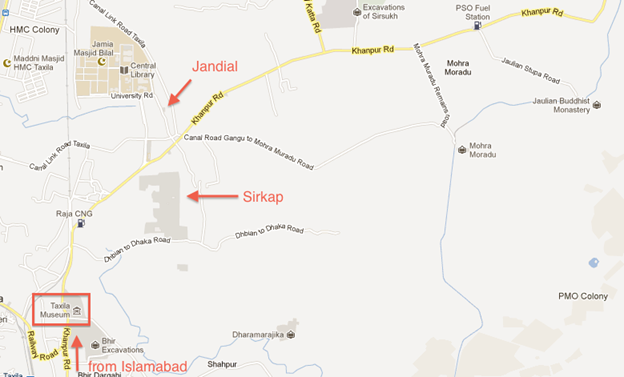
Figure 1: Map of Mohra Moradu (google, 2019)
The monastery consists of twenty-seven rooms and a water tank in the center. Two centuries later repairs were done in semi ashlar masonry. When stucco sculpture was also added in the new niches built inside the monastery, its core was made up of rubber-faced with diaper limestone. Kanjur stone was employed only in moulding plaster and other decorative features. (Marshall, 1960) The Mohra Moradu has been included in the world heritage list of UNESCO since 1980.
Taxila valley is rich in the natural environment and highly suitable for animals and plants. There are around 250 to 300 species of plants in hills. Different types of species and diversity of herbs are also found (Mehmood, 2013)
The plant species belong to various families of trees, shrubs, herbs, climbers, grasses, and fodder crops. Mostly abundant plants are mentioned with their biological names Bauhinia variegate, Ficus carica, Pinus roxburghi, Quercus leucotrichophora (Mehmood A. , 2013). According to researcher observation, the binding material between the stones is decreased, due to the non-firm behaviour of wall cracks that have been developed in it which leads to the growth of bio-detergents. Binding material loosens the ability of stone resistance against the climate effect is reduced. The capping above the walls is not enough to cope with environmental effects.
Identification of Plants present in the Mohra Moradu monastery
| Ser.no | Plants | Phylum/subphy–lum | Class/subclass | Order | Family | Genus | Species |
| 1 | Oxalis Corniculata | Trachaephyta | Megnolipsida | Geraniales | Oxalidaceae | Oxalis | Oxalis Corniculata |
| 2 | FicusCarica | Magnoliopsida | Rosalis | Moraceae | FicusL.fig | F. carica | |
| 3 | Ajuga | Lamiales | Lamiaceae | Ajuga | |||
| 4 | Ajugabracteosa | Lamiales | Ajuga | ||||
| 5 | Brassica | Brassicales | Brassicaceae | Brassica | |||
| 6 | Lactuca | Asterales | Asteraceae | Lactuca | |||
| 7 | Adiantumincism | Tracheophyta | Polypodiopsida | Polypodiales | Peteridaceae | Adiantum | Adiantumincism |
| 8 | Desmostachybipinate | Poales | Poaceae | Desmostac-hya | D. bipinate | ||
| 9 | Marchantiapolymorpha | Marchantiophyta | Marchantiops- Ida | Marchantales | Marchantiac- Eae | Marchantia | M. polymorpha |
| 10 | Kickxiaelatine | Lamiales | Plantaginaceae | Kickxia | K.elatine | ||
| 11 | Ajugaparviflora | Lamiaceae | Ajuga |
Plant specimens were identified by comparing their morphological characters with herbarium samples of the herbarium of Pakistan (ISL) and further confirmed with the help of the flora of Pakistan.
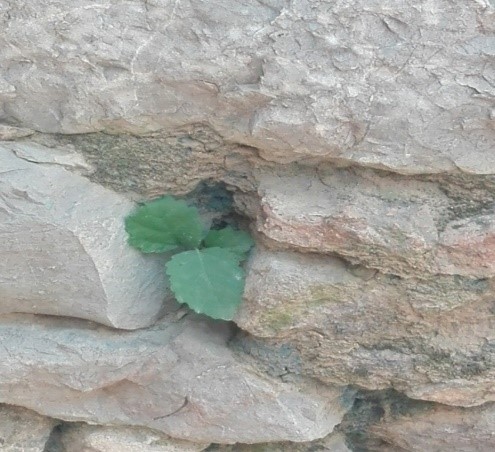
Figure 2: Ficus Carica (by Researcher)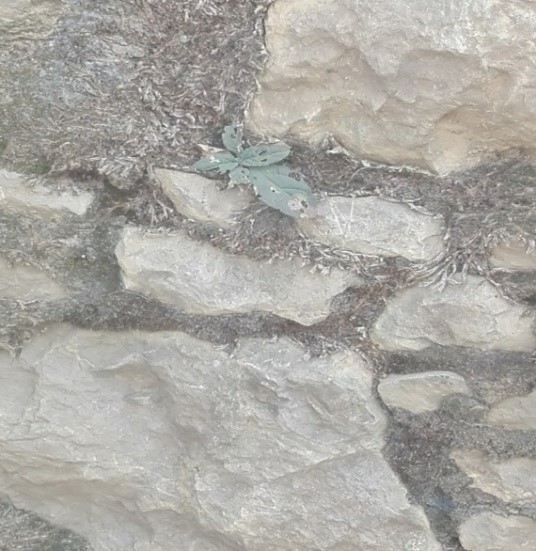
Figure 3: Ajuga bracteosa (by Researcher)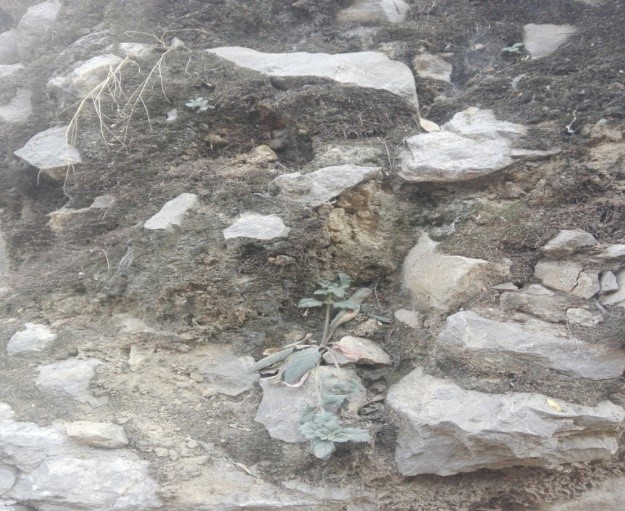
Figure 4: Ajuga perviflora (by Researcher)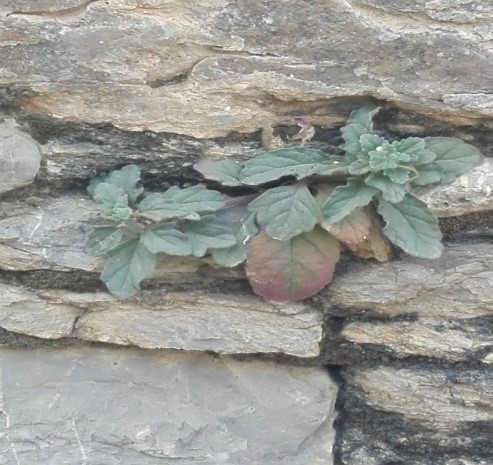
Figure 5: Ajuga (by Researcher)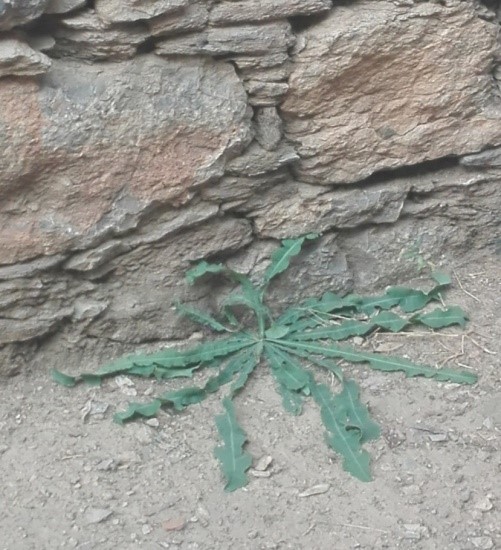
Figure 6: Lactuca (by Researcher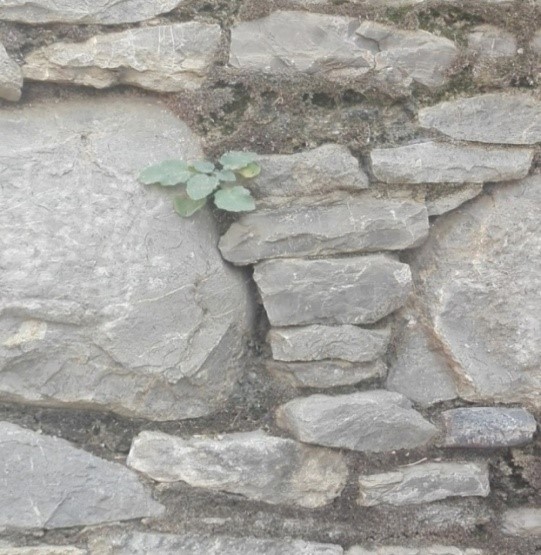
Figure 7: Brassica (by Researcher)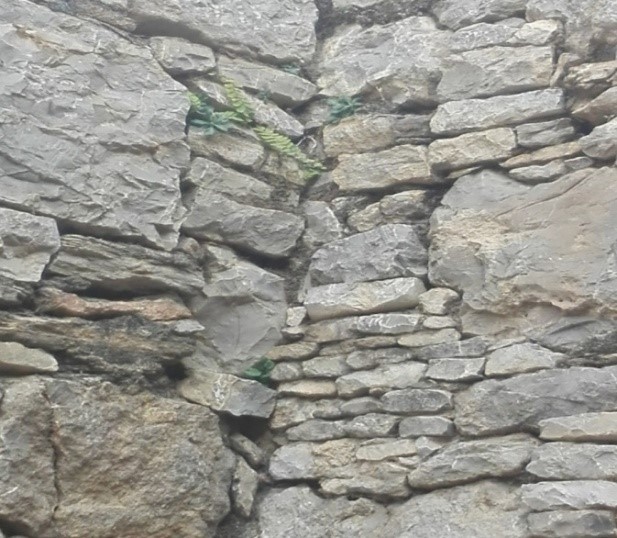
Figure 8:Adiantium incisum (by Researcher)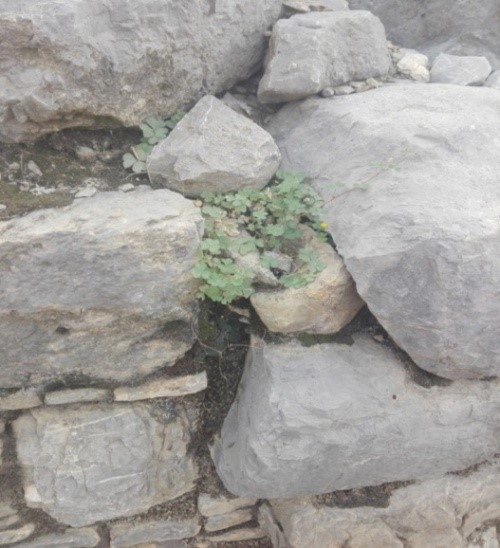
Figure 9:Oxalis Corniculata (by Researcher)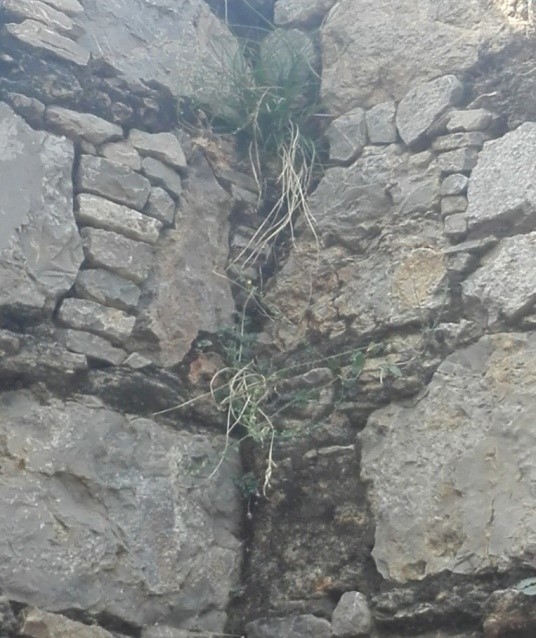
Figure 10:Desmostachybipinata (by Researcher)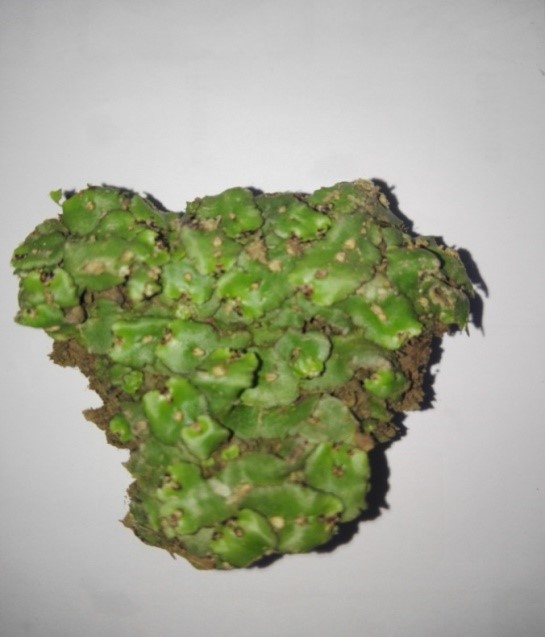
Figure 11:Marchantia polymorpha (By Researcher)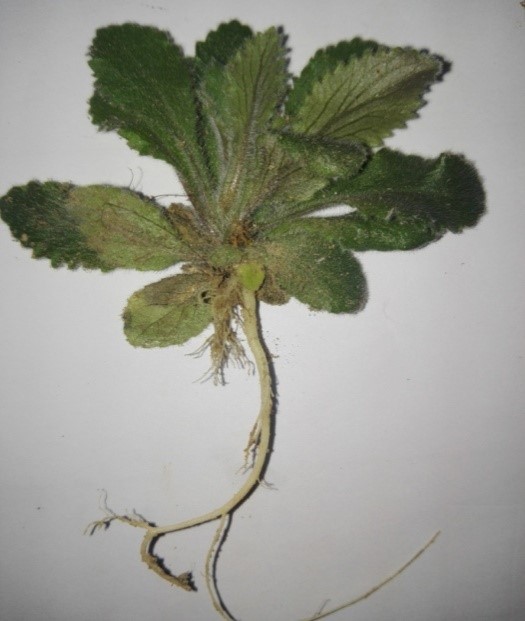
Figure 12: Kickxia elatine (by Researcher)
Some plants have deep roots which cause adverse effects because they carry their food in the depth of binding materials of stone. The plants having not deep roots (surface feeders) cause less damage as compared to the deep feeders’ plants. The plants which grow above the wall absorb water or nutrients and automatically affect the structure of the wall. Once the growth of plants starts it moves gradually downward and is not easy to control.
Root growth can push aside soil material, leaving space when the plant dies. Trees produce even greater disruption. If they grow in more than one, their entire root system and the soil attached to it is often pulled out (Crombé 1993, Kooi 1974). The cavity roots create is then filled by sediment falling from. (Huishman, 2009)
Strategies for the plants exterminate
There are Individual Strategies for the eradication of plants such as herbicides and chemicals are given.
Ficus Carica: Glyphosate, triclopyr is a chemical treatment of the Ficus Carica. Vinegar is an acid that gives quick results but is careful during application because it can acidify the soil.
Ajuga: Corn gluten meal, it can be used as an ideal herbicide. Due to its ability to be biodegradable, it is persistent in the environment (Common sense pest control Quarterly, 2003).
Barssica: Paraquat is used to control the growth of Barssica.
Lactuca: Lactuca or Prickly Lettuce for the resistance of it Sulfonylurea can be used (J.Mikulka, 2003).
Adiantium incisum: Glyphosate herbicide is used to control the growth of perennial grass.
Oxalis corniculata:“1-Naphthalenacetic Acid applied at 8.4 and 11.2 kg/ha and achieved 99% and 100% control.”Phytotoxicity to creeping wood sorrel was resembled to plant age and the level of injury decreased (S.Holt, (n.d.))
Desmostachy bipinata: Dalapon and Paraquat can control D. bipinata. Imazorpyr is used on the non-cultivated land for the cultivation of D.bipinata.
Marchantiapolymorpha: Sodium Carbonate peroxyhydrate is used to suppress the growth of Marchantia(Inc, (n.d.)).
Kickxiaelatine: Tribenuron methyl tank mixes with oxyfluorfen is efficient for the weeds. It should apply when it is not longer.
Conclusion
It is concluded that the cultural heritage is precious the care should be taken to save it. The plant growth enhances during rainy seasons before it the preventives measures take. The roots of plants are harmful to the sites as they deteriorate the material of construction which leads to the permanent loss of structure. The roots of some plants are long and absorb different materials that invite the microbes to grow there, thereby various communities of microbial organisms form.
Suggestions
- Regular Inspection of the Archeological remains/monuments is necessary to be carried out.
- Regular cleaning of the joints of the stones/brickwork with the soft brush to remove soil and loose material is very essential because it supports the growth of plants and ultimately weakens the structures.
- Trees should never be allowed to grow in the vicinity of the Archaeological remains/monuments. They are easy to deal with initially but firmly rooted into the structure and entwined with masonry. Vigilance, with early removal using approved herbicides.
- Open joints of the masonry may be sealed with lime mortar, after its careful cleaning.
- Soil, Water, and Sunlight are the three main factors for the growth of plant if we minus one of the factors the plants shall not grow to stop it, it is proposed that steel truss (Like Julian Monastery) may be erected on the site to save it from rainwater will not penetrate on the remains and chances of wild shall be minimum.
- To stop the penetration vertical Damp Proof Course (DPC) may be provided to the standing stone and brick can be provided.
Acknowledgment
First of all, I am very thankful to Allah who is most beneficent and merciful. The researcher wishes special thanks to Dr. Maryam, and Dr. Zafar for the identification of plants in the Mohra Mohra site.
Bibliography
Bhati, M. I. (2000). Taxila An ancient meteropolis of Gandhara. Model Town, Sialkot Pakistan: by Mrs, Munazza Ilyas.
D.J.Huishman(ed). (2009). Degradation of Archaeological Remains. Sdu Uitgevers b.v. Den Haag.
google. (2019, September 9). www.google.com. Retrieved September 9, 2019, from Around Islamabad:Taxila (Ruins of Gandhara): https://www.google.com/imgres?imgurl=http%3A%2F%2F2.bp.blogspot.com
Huishman. (2009). Degradation of Archaeological Remains. Sdu Uitgevers b.v. Den Haag.
Marshall, J. (1960). A guid to Taxila. Sani Communication.
Mehmood, A. (2013). Determination of toxic heavy metals in indigenous medicinal plants used in Rawalpindi and Islamabad cities, Pakistan. Journal of Ethnopharmacology , 158-164.
Mehmood, A. (2013). Determination of toxic heavy metals in indigenous medicinal plants used in Rawalpindi and Islamabad cities, Pakistan. Journal of Ethnopharmacology , 158-164
JAZAKALLAH for your support dear.
Congratulations saima, may all your dreams come true.I look forward to your next article
JAZAKALLAH dear for your cordial response
MashaAllah great work saima.
It’s informative and good knowledge for us.
Well done. Keep it up ?. Good luck
JAZAKALLAH for your kind words.
Congratulations and best wishes for your future endeavors.
JAZAKALLAH that’s very kind of you dear.
Well versed and informative. Congratulations and good wishes
Very informative article. Keep it up.
JAZAKALLAH Respected Sir, because my teacher believe at me, I never gave up. Now I am more optimistic Sir g.
Great ….it’s very helpful to understand the some scientific facts about mohra muradu….
JAZAKALLAH dear for your words of appreciation.
Masha Allah amazing articulated
My all good wishes alway with you
JAZAKALLAH dear for your precious prayers.
Beautifully Articulated!! Loved Your suggest!
JAZAKALLAH partner It’s means a lot for me.
Superb, it’s so informative.
JAZAKALLAH dear Sadfu.
Wowza, beautifully articulated, loved your Suggestions in the given topic
JAZAKALLAH for your support dear.
Finally you achieved your dream and your research paper is published it is very informative. Congratulations Samia Mushtaq